
Which premises fall within the Order?
The Order applies to almost all non-domestic premises in England and Wales and to the common parts of buildings containing two or more homes. For a workplace, the relevant duty is not limited to buildings owned by the employer. Responsibility needs to be considered in relation to who employs people or controls the premises.
The Order's own term for a single private home is domestic premises, and the exclusion is for the home itself, not the building it sits in. In a block of flats or a house in multiple occupation, the common parts are within the Order, and so, since the Fire Safety Act 2021, are the structure, the external walls and the flat entrance doors. Inside individual rented homes, fire safety is dealt with under housing legislation rather than the Order. Establish which areas and building elements are within the assessment scope rather than describing an entire block as a private home.
Who is the Responsible Person?
For a workplace, the Responsible Person is the employer. Otherwise, it is the person in control of the premises or the owner. In a block of flats, this is usually the freeholder or management company, with a managing agent often arranging the assessment on their behalf. There can be more than one Responsible Person for a building, for example a freeholder and a commercial tenant, and since 1 October 2023 each must take reasonable steps to identify the others and cooperate with them.
Arranging a visit and holding responsibility are not the same thing. The Responsible Person can undertake the assessment if competent or appoint a competent person, but remains responsible either way, and since 1 October 2023 must record the name and organisation of anyone engaged to make or review the assessment. The Government consulted in 2026 on mandatory certification of Fire Risk Assessors and on whether self-assessment should be restricted for higher-risk premises; the law has not changed yet. When requesting work, identify who controls the building and who will receive and act on the report.
What must be assessed and recorded?
The duty is to make a suitable and sufficient assessment of the risks to everyone lawfully on the premises, and to anyone nearby who could be affected by a fire there, so that the general fire precautions can be identified: means of escape, fire detection and warning, fire-fighting equipment, action in the event of fire, instruction and training, and measures to reduce the risk of fire and of its spread. An assessment examines risk and produces priority-rated actions; it is not simply a record that someone attended the site. Building use, occupancy, escape arrangements and management information all help explain the conditions the assessment considers.
Since 1 October 2023, section 156 of the Building Safety Act 2022 has required every Responsible Person to record their fire risk assessment and fire safety arrangements in full, together with the name and organisation of anyone engaged to make or review the assessment. Do not rely on older wording that ties written findings to the number of employees. Keep the assessment and arrangements together so the people managing the building can understand both the findings and the controls. In residential buildings with two or more homes, residents must also be given fire safety information in a form they can understand.
What changed for blocks of flats?
The Fire Safety Act 2021 clarified that, in buildings containing two or more homes, the Order covers the building’s structure, external walls and flat entrance doors. These elements should not be overlooked on the assumption that a common-parts assessment is concerned only with corridors and stairways.
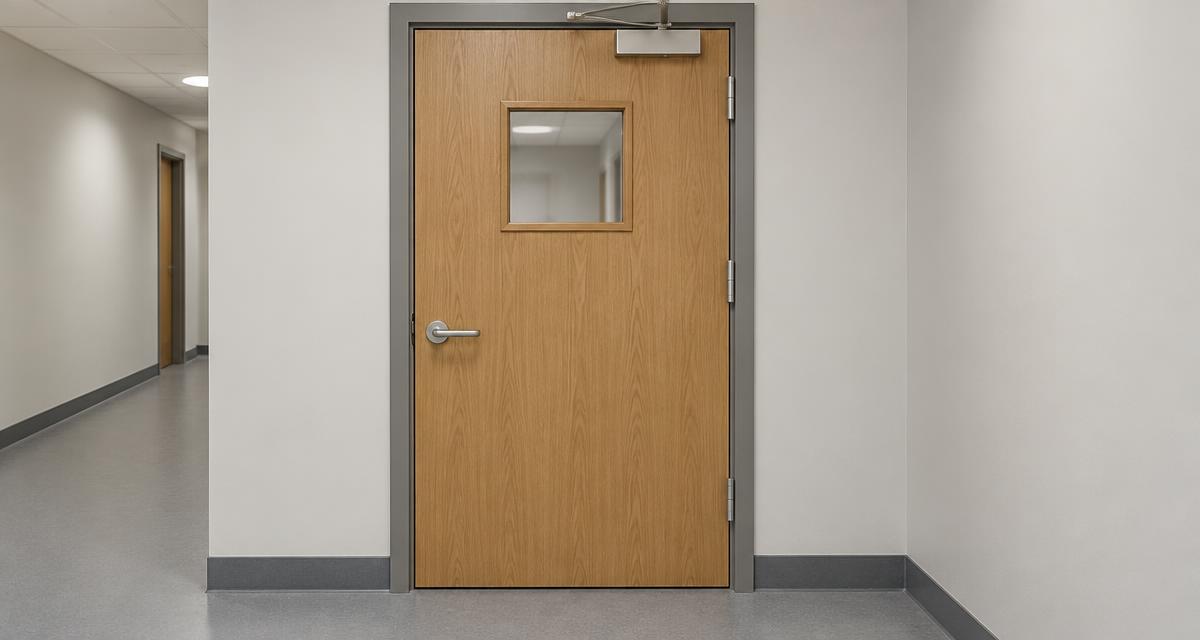
The Fire Safety (England) Regulations 2022 impose extra duties on the Responsible Person in multi-occupied residential buildings. In buildings over 11 metres, fire doors in common parts must be checked at least every three months, and best endeavours used to check flat entrance doors at least once a year. These England-specific duties should not be presented as UK-wide rules.
In buildings of at least 18 metres or seven storeys with two or more homes, the 2022 Regulations add further duties, including monthly checks of lifts for use by firefighters and of other fire-fighting equipment, information on the external walls and floor plans for the fire and rescue service, a secure information box and wayfinding signage. Those buildings are also higher-risk buildings under the Building Safety Act 2022, with an Accountable Person whose duties sit alongside the Responsible Person's. Since 6 April 2026, the Fire Safety (Residential Evacuation Plans) (England) Regulations 2025 have required the Responsible Person for buildings of at least 18 metres or seven storeys, or over 11 metres with a simultaneous evacuation strategy, to identify residents who would need help to evacuate, offer them a person-centred fire risk assessment and prepare a building emergency evacuation plan.
What happens after an assessment is completed?
The report gives the Responsible Person a basis for considering priority-rated actions, and the duty is to act on them: the Order requires the general fire precautions the assessment identifies to be put in place, not only recorded. Keep the assessment under regular review and revisit it when there is reason to suspect it is no longer valid or a significant change has occurred; the Order sets no fixed interval. Completing the first report does not end the need to consider the building's risks.
Where separate inspections or surveys are commissioned, those reports record what is found. The Responsible Person decides next steps with their Fire Risk Assessor; an inspection report is not an assurance about the whole building, a certificate or a works specification.
What can happen if the duty is not met?
The fire and rescue authority is usually the enforcing authority. It can issue alterations, enforcement and prohibition notices, and a prohibition notice can restrict or stop the use of premises. A prosecution can lead to an unlimited fine and, for the most serious offences, imprisonment. The Responsible Person should take advice on the circumstances of their own premises.
This is general information, not legal advice. The Responsible Person should take advice on their own situation.
What about Scotland and Northern Ireland?
Different legislation applies in Scotland and Northern Ireland, and our work follows it.